
Beyond the Interview. Into the Brain.
Quantitative EEG (qEEG) translates your brain’s electrical activity into an objective, data-driven map — giving Tri-MED a diagnostic precision that symptom checklists alone cannot provide.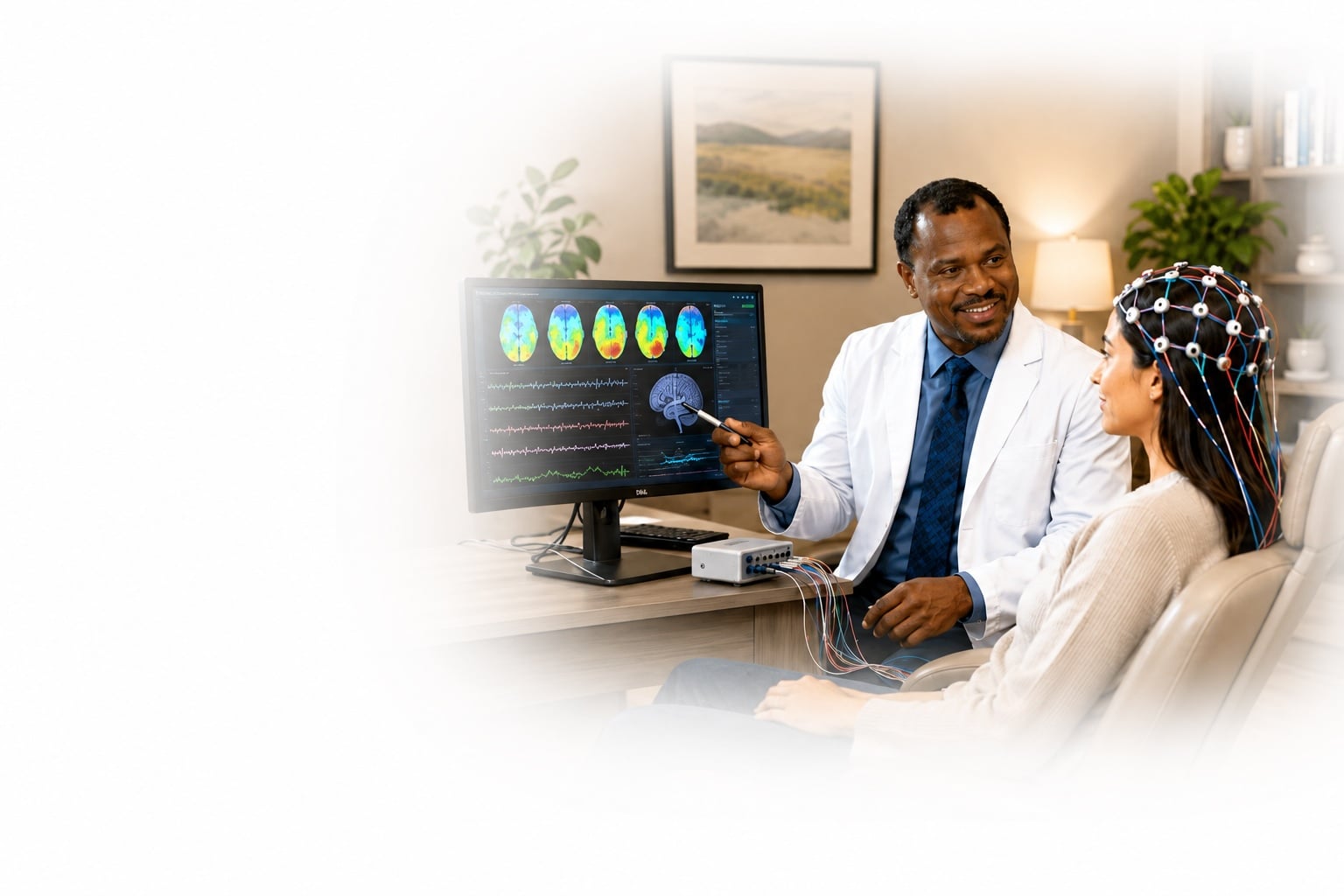
An MRI for your brain's electrical language
What each condition looks like in the brain
Anxiety
A brain stuck in high alert. Beta/Gamma signature excess with disrupted coherence patterns.
Depression
A brain with disconnected halves. Frontal alpha asymmetry predicts antidepressant response before treatment begins.
ADHD
A brain running on the wrong frequency. Theta/beta ratio and frontal connectivity distinguish subtypes.
Cognitive Decline
A brain slowing before you notice. Peak alpha frequency slowing and theta/delta ratios for early MCI detection.
Five steps from brain map to treatment plan
1. Clinical Intake
Full psychiatric history, symptom timeline, prior treatments, and biological assessment — establishing the clinical question qEEG will help answer.
2. Brain Map Acquisition
A 19-channel EEG cap is applied in a relaxed, comfortable setting. Eyes-open and eyes-closed recordings — typically 20–30 minutes.
3. Computational Analysis
Artifact-cleaned data is analyzed for power, coherence, phase, and connectivity — compared against a normative database matched to your age and sex.
4. Integrated Interpretation
Your physician interprets findings in the context of your clinical picture — labs, genetics, sleep data, and reported symptoms.
5. Guided Treatment
qEEG findings inform medication selection, neurofeedback targeting, supplement protocols, and ongoing monitoring — with repeat mapping to measure response over time.
Three things qEEG changes at Tri-MED
More Accurate Diagnosis
Conditions that look identical on a symptom checklist have measurably different neural signatures. qEEG helps us distinguish them and treat what's actually present.
Fewer Medication Dead Ends
Frontal alpha asymmetry and other biomarkers predict which patients are neurologically likely to respond to specific antidepressants and stimulants.
Early Response Detection
Repeat qEEG maps at 6–8 weeks can identify neurophysiological treatment response — even before patients report feeling better.