A Different Path for Treatment-Resistant Depression
For patients who have tried traditional antidepressants without meaningful relief, ketamine therapy may offer a different therapeutic pathway — one focused on rapid symptom relief, glutamate signaling, and neuroplasticity.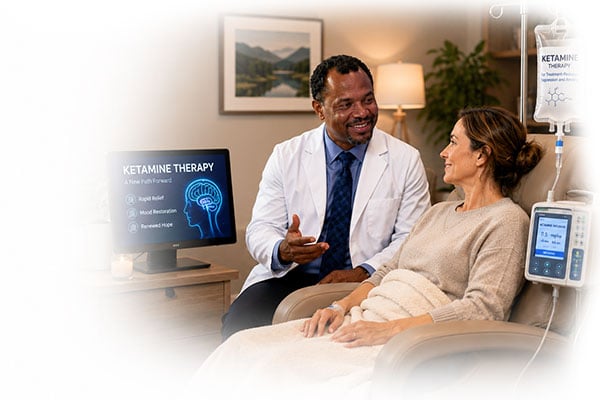
Ketamine with a neuroplasticity lens
Ketamine therapy that supports brain change
Rapid-Acting Potential
Traditional antidepressants often take weeks to begin working, and for some patients, they never provide adequate relief. Ketamine may work more quickly for certain patients with treatment-resistant depression, which is one reason it has become an important option in advanced psychiatric care.
For patients who feel trapped in a long cycle of medication trials, this different timeline can be meaningful. The goal is not a temporary “high” or escape from symptoms. The goal is to create measurable clinical improvement and help the brain begin shifting toward healthier regulation.
Glutamate & Synaptic Repair
Ketamine’s effects are connected to the glutamate system, which plays a critical role in neural communication and synaptic function. In depression, the brain’s ability to communicate between mood, motivation, and executive function networks may become disrupted.
By influencing glutamate signaling, ketamine may support processes involved in synaptic repair and neuroplasticity. This is why ketamine is often discussed not only as a symptom treatment, but as a therapy that may help the brain re-engage its capacity to adapt and recover.
Medically Monitored Infusion Care
Ketamine therapy at Tri-MED is provided in a monitored clinical setting. Before and during treatment, the care team evaluates vital signs, cognitive awareness, comfort, and clinical response.
Patients remain in a comfortable treatment environment during the infusion and recovery period. Because ketamine can temporarily affect perception, coordination, and awareness, patients need a trusted friend or family member to drive them home after each session.
How we think about ketamine therapy
Ketamine is not a shortcut. It is a carefully guided intervention.
Ketamine therapy should never be treated as a casual wellness service. It is a medical treatment that requires thoughtful screening, monitoring, and follow-up. At Tri-MED, we evaluate whether ketamine is appropriate based on diagnosis, treatment history, medical risk factors, medications, goals, and overall mental health needs.
We also discuss what ketamine can and cannot do. Some patients respond quickly. Others need a full treatment series before improvement becomes clearer. Some may need maintenance planning or additional therapies to sustain results.
The infusion is only part of the treatment.
A ketamine session may help create a window of neuroplasticity, but what happens around that window matters. Patients may benefit from supportive psychotherapy, lifestyle changes, sleep optimization, medication adjustments, nutritional support, and integrative strategies that help reinforce healthier patterns. At Tri-MED, ketamine therapy is not isolated from the rest of care. It is integrated into a larger treatment plan designed to support meaningful recovery.We treat the person, not just the depressive episode.
Treatment-resistant depression can be shaped by many factors: trauma history, chronic stress, inflammation, sleep disruption, hormonal imbalance, metabolic dysfunction, medication intolerance, and genetic differences in medication processing. Ketamine may be one important tool, but it is not the whole picture. We continue asking why depression has persisted and what else may be blocking recovery.The next step is always purposeful
Clinical Evaluation
Before ketamine therapy begins, your provider reviews your psychiatric history, current symptoms, previous medications, therapy history, medical conditions, and treatment goals. This helps determine whether ketamine therapy is appropriate and safe for you.
Pretreatment Assessment
Before each infusion, the team checks key clinical measures such as blood pressure, pulse, and cognitive awareness. This gives the provider a clear baseline before treatment begins.
IV Infusion Session
During treatment, ketamine is administered through an intravenous infusion while you relax in a comfortable chair. The infusion itself typically lasts around 45 minutes, though the full visit is longer because of preparation and recovery time. Some patients experience a floating sensation, altered perception, or a dream-like state during treatment. These effects are temporary and are monitored by the clinical team.